UF Candidate Forum: Politicians Talk Local Priorities and Amendment 3
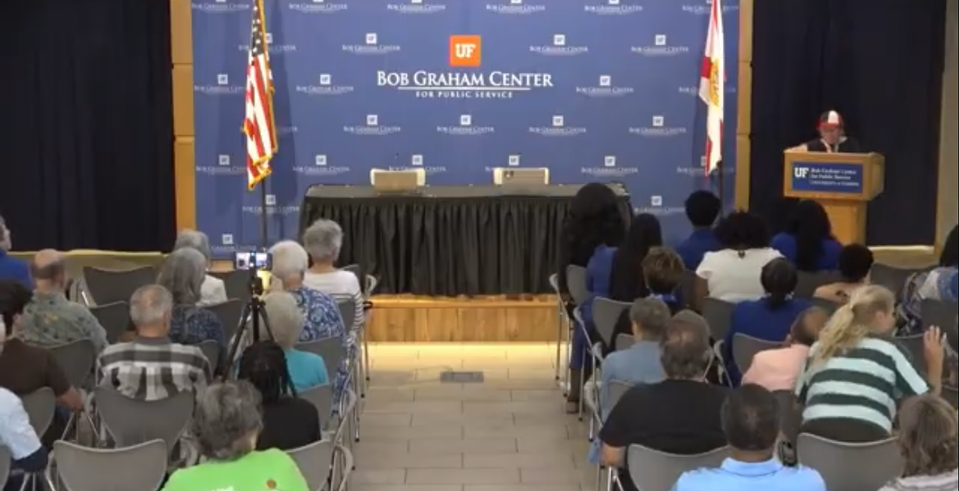
Last month, candidates for the Alachua County Board of Commissioners, the Alachua County School Board and the Florida legislature went to Pew Hall at the University of Florida to share their platforms and talk about critical local issues. Much of the conversation centered around a proposed constitutional amendment that has the potential to dramatically change the way local governments are funded in Florida.
The forum, co-sponsored by the Bob Graham Center for Public Service and the League of Women Voters of Alachua County, included candidate panels for Alachua County Commission District 4, School Board District 1, Florida House Districts 10 and 22, and Florida Senate District. The event ended with a panel discussion on Florida Amendment 3.
County Commission District 4
Incumbent Ken Cornell and challenger Dwayne Baines are running for Alachua County District 4 seat.
Dwayne Baines is a licensed clinical social worker who was born and raised on Gainesville's east side and works with the community daily. He said he is running for District 4 but is focused on all of Alachua County, describing himself as "here for the community" rather than "for show."
Cornell, a CAand county commissioner since 2014, said the most important issues are growth management, road infrastructure and Amendment 3. He cited the passage of an infrastructure sales tax and a 10-year, quarter-billion-dollar road plan.
"We have protected 36,000 acres of forest, wetlands, and prairies this month," Cornell said. "We also adopted the roll back rate."
On his first-year priority, Cornell said he would continue strengthening working relationships with other governing bodies, including the City of Gainesville, small cities, and the school board.
Both candidates expressed concerns about Amendment 3's potential impact on county services.
Cornell described it as a "$64 million hit" to the county budget and warned of a "tax shift and service reduction," saying one size does not fit all of Florida's 67 counties, including 29 fiscally constrained counties. He said the commission has a meeting scheduled for October 6 to begin examining potential effects. Baines said he had researched the amendment and found divided opinions, including support from the Florida Association of Realtors, but said he did not think it was a good bill as written. He said rural areas such as Waldo, Hawthorne, and Melrose could be harmed by cuts to services such as fire rescue and police.
In his closing statement, Baines said he was motivated to run because he had not seen East Gainesville improve over the years and wanted to encourage residents to participate in the process. "Your vote is your voice," he said.
Cornell pointed to his record, including the road plan, land preservation, and the rollback rate, saying he stands for local control, voting rights, and transparency. He said the next commission could face a $64 million budget hole if Amendment 3 passes and that he knows the county budget "line by line."
School Board District 1
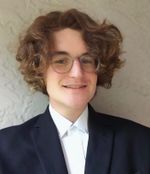
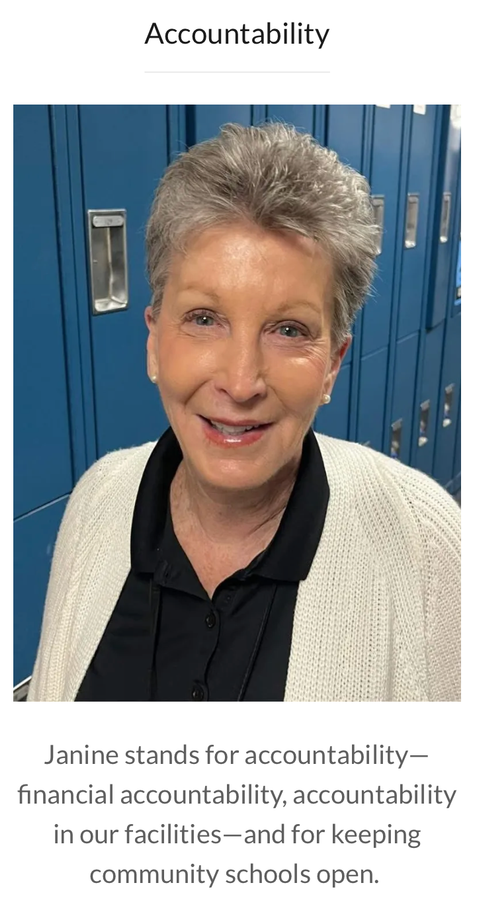
Standing for the District 1 seat are Hunter Miller, a teacher at Howard Bishop Middle School, and incumbent Janine Plavac, who has served on the board for 17 months.
Miller said his top concerns included teacher retention, school safety and a 38-percentage-point literacy achievement gap. "I want to make sure that we have an equitable education no matter where you are in Alachua County, whether it be rural or in Gainesville itself," Miller said.
Plavac cited her 23 years of teaching experience and her committee work at the school and district levels. "I want to make sure that we have an equitable education no matter where you are in Alachua County, whether it be rural or in Gainesville itself," Miller said.
Plavac emphasized her 23 years of teaching experience and her work on school and district committees. "Education is the greatest gift we can give our children, and I hold that as my standard in all decisions," she said.
They also addressed the state's voucher program. Miller said he could not blame parents for choosing what they believe is best for their children, but noted that each student leaving public schools takes approximately $8,000 in funding with them, which he said limits resources for the district. He argued that Alachua County Public Schools must become more competitive by investing in career and technical education certification courses, supporting differentiated instruction, and ensuring that students receive the same quality education regardless of which school they attend. Miller also said public schools should be a "safe haven" for students and that parents should feel they are the best option in the county.
Plavac said vouchers are used by parents who feel public schools are not meeting their child's needs, who prefer a parochial (religious) school, or who have had a negative experience in public schools.
She said the voucher program is open to every student and parent, and that while the financial impact is significant when vouchers are used, the district already takes that into account in its budget. Plavac said the district lost 1,500 students this year, but said those losses were not due to vouchers and instead reflected an overall decline in enrollment. She agreed with Miller on expanding career and technical education programs as a way to retain students, pointing to the barber program at Gainesville High School and suggesting that similar programs could be added at other schools. She said such expansions cost money and suggested reallocating funds from other district areas, which she described as "fluff."
State House Districts 10 and 22
In District 10, Merrily Mitz Gypson (D) is running against Marshall Rawson (R), who was unable to attend. In District 22, Amy Trask (D) faces Chad Johnson (R), who also did not attend due to a scheduling conflict.
Gypson, a business owner and environmental advocate, discussed her work opposing bottling plants and addressing water quality issues in the Santa Fe River region.
"We do not have enough water for new housing that we need," Gypson said, criticizing the water management districts' oversight.
She cited nutrient loading from fertilizer and agricultural interests, as well as lawn fertilization, and said development projects are often driven by profit. She also said she opposed Amendment 3, warning that rural communities cannot afford the loss of revenue and that the measure should not pass "not this way, not the way it's written." She raised concerns about heirs' property, saying heritage families can face rising taxes and lose land passed down through generations. On health care, Gypson described District 10 as a health care desert and said she would work to restore access to care in areas that previously had clinics, while supporting "Medicare for all."
Trask, a mother, advocate, domestic violence survivor, and legislative bill author, said she went to Tallahassee with her children and introduced more than 10 pieces of legislation, including two federal pieces and two Senate priority bills. She said the Haven Act, a domestic violence reform bill, passed unanimously and bipartisanly and was signed into law. "I'm running on the basic principle that survival should be the floor that we build from and not the ceiling that we aspire to reach," Trask said. On water, she criticized preemption bills such as SB 180, raised concerns about a Levy County sand mine and bottling operations. Trask said she would trust local communities and water experts to make decisions.
On Amendment 3, Trask said she opposed it and that it was pushed through too quickly without proper checks and balances. She warned of a multibillion-dollar price tag, said fiscally constrained communities and police and fire organizations have come out against it, and specifically cited a fire rescue cooperative agreement between Chiefland and Levy County that she said could be cut. She also said costs would shift onto non-homeowners and renters. In her closing statement, Trask said she would be accountable to voters and not "bought out" by corporate businesses and PACs.
State Senate District 6
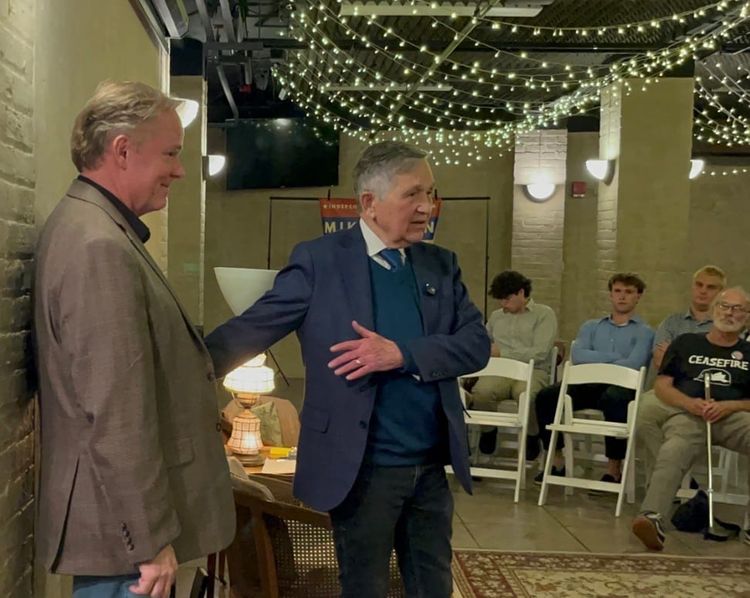
Three candidates are competing for the Senate District 6 seat: Jennifer Bradley (R), who did not attend; Jason Bellamy-Fults (D); and Joseph Thornton (American Solidarity Party). No statement from Bradley was included in the forum.
Bellamy-Fults, a fourth-generation Floridian who has lived in Alachua County since 2008, described himself as an electrical worker, educator, and University of Florida employee. He said he is a first-time candidate running because he believes the Legislature "has been captured by the very corporate interests that it should be keeping an eye on." He criticized "blatant corruption" in the capital and said lawmakers have failed to address the rising cost of living while increasingly stripping communities of self-governance. He noted that the incumbent did not attend and said his campaign is "100% funded by people, not PACs."
Thornton, a retired psychiatrist, said he worked at the University of Florida for 15 years, most recently supervising psychiatry residents and teaching global bioethics and artificial intelligence.
He said he trained in psychiatry at Stanford in the 1980s, where he was introduced to artificial intelligence, and later worked in prison health care at Union Correctional Institution in Raiford, where he was medical executive director responsible for the health care of 1,800 inmates, including 300 on death row. He said his message centers on "human dignity" and the principle of subsidiarity, meaning that people should control what they can control rather than having decisions taken away by those above them.
Asked to name the three issues with the greatest impact on district residents, Thornton listed abolition of the death penalty, humane and transparent immigration detention, and oversight of artificial intelligence. He said all people have innate dignity and that society can be protected through life in prison. On Al, he said the immediate danger is the concentration of power and that companies are rewarded for laying off workers while stock prices rise.
Bellamy-Fults listed affordability, local control, and anti-corruption, saying the three are linked. He said he supports Medicaid expansion, co-sponsoring legislation to reduce insulin co-pays, and addressing what he described as regulatory capture in energy policy that keeps bills high and limits investment in efficiency and renewables. He also said Floridians are underpaid and that the state must address both expenses and income.
In his closing statement, Bellamy-Fults said the state is "terribly broken" but "not irreparably broken," and urged voters to elect candidates accountable to constituents. Bellamy-Fults also called out the Republican candidates who did not attend. Thornton urged voters not to be afraid to demand change and to speak up for human dignity. He asked voters to support a third party and said he favors open primaries and ranked-choice voting. He also praised Gypson, the District 10 candidate, for her expertise on water issues, saying he had dropped out of the House race.
Amendment 3 Panel Discussion
The Greater Gainesville Chamber of Commerce presented a panel featuring Gainesville Mayor Harvey Ward, who opposes Amendment 3, and former mayor Ed Braddy, who supports it.
Moderator Alex Patton explained that Amendment 3 would increase homestead exemptions from approximately $50,000 to $150,000 in 2027 and $250,000 in 2028, with inflation adjustments thereafter. It would also reduce the increase cap on non-homestead properties from 10% to 5% and restrict how local governments can spend ad valorem taxes.
Ward cited opposition from organizations including the Florida Sheriffs Association, Florida TaxWatch, the Sierra Club, and firefighter unions.
"When you call 911, it is going to take longer for EMS to get to your house," Ward said. "It just will."
He warned that the Alachua County Library District would operate with 22-23% fewer funds and suggested smaller Florida cities might not be able to operate under the new restrictions.
Braddy countered that the money "stays in Alachua County" and remains with homeowners and property owners.
"It is not a secret to say it's pretty expensive to live in Alachua County," Braddy said. "The money is not disappearing. It will stay local, but it will be used not by politicians."
Braddy acknowledged concerns from some law enforcement associations but noted that Miami-Dade Sheriff Rosie Cordero-Stutz had urged voters not to "get caught up in the fear-mongering."
Amendment 3 will require 60% voter approval to become law.