“Every Accusation is a Confession” Infamous Gainesville Catholic School Administrator Targets GPD Detective and Bishop in Lawsuit
Update | Feb 16
On February 12, Ryan Clemens submitted a second amended complaint, still naming the City of Gainesville as a defendant.
On February 13, Duval lawyer David Chauncey informed the court he would serve as legal counsel for Bishop Pohlmeier.
On February 16, the City of Gainesville and Russano submitted a response in opposition to the refiling of civil counts against them.
Northern Florida District Chief Judge Allen Winsor Dismissed the Counts Against the City of Gainesville and Det. Russano but the Suit Remains Open with Pending Counts Against Bishop Pohlmeier
Editor’s Notes: In the lawsuit, Christopher Chell is rarely overtly named and only referred to as “the athletic director.” When quoting excerpts of the lawsuit, the term "athletic director” will frequently be replaced with Chell’s name in [brackets] because he is the person being referred to. Additionally, the lawsuit was amended after filing, and only the amended complaint is covered, but both the original and amended complaint are available for download at the bottom of this page.
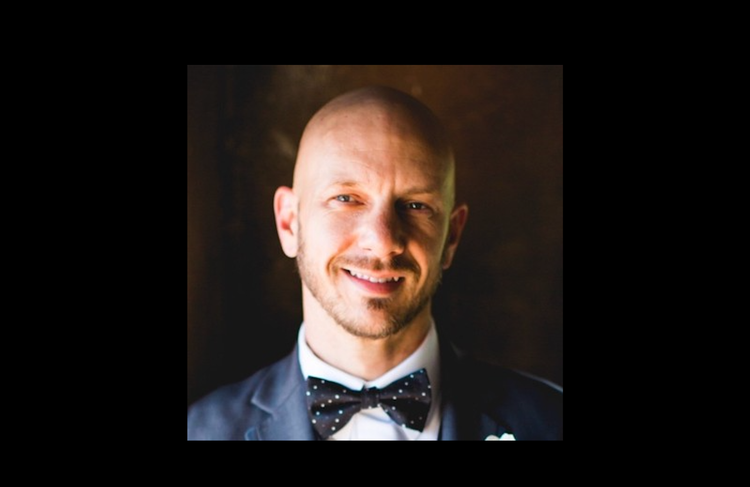
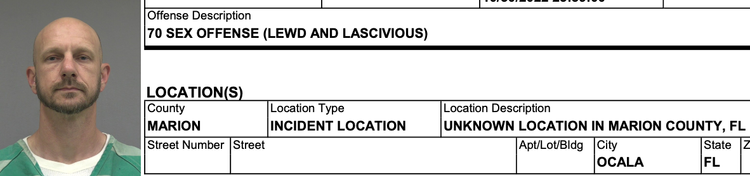
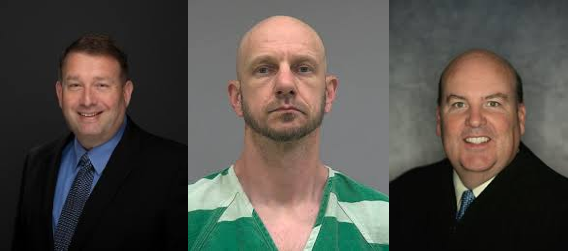
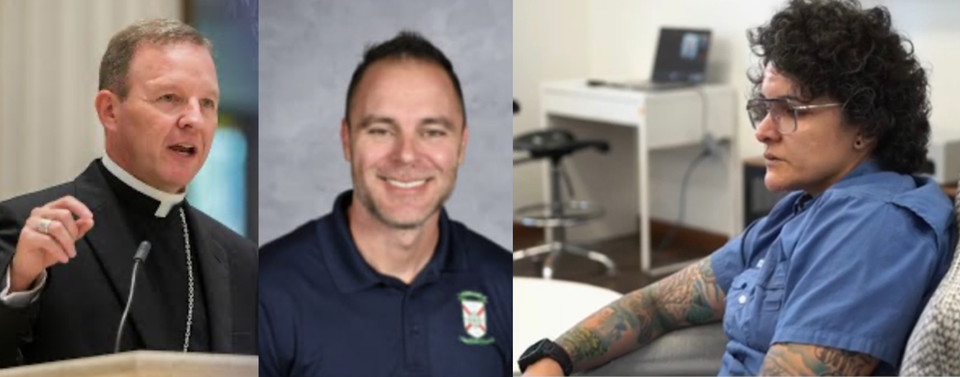
Former St. Patrick Interparish Catholic School Administrator Ryan Clemens filed a lawsuit naming defendants as the City of Gainesville, Gainesville Police Department (GPD) Detective Desiree Russano, and Bishop Erik Pohlmeier, head of the Diocese of St. Augustine, a branch of the Catholic Church with authority over the Gainesville-based Catholic school.
Background:
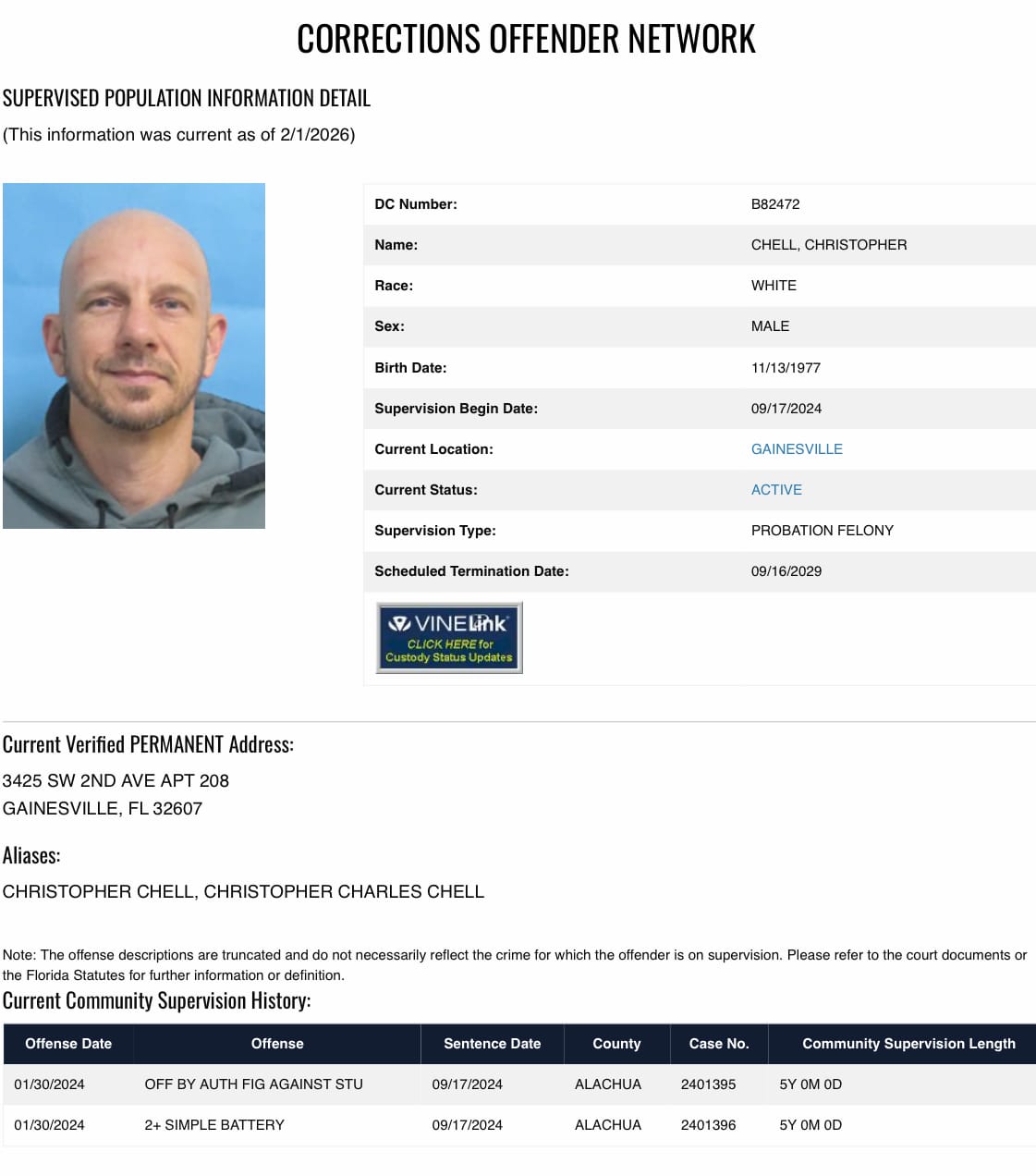
In 2024, gym teacher Christopher Chell was arrested for molesting girls who attended St. Patrick Interparish.
When Chell was arrested, Clemens had served as the assistant principal at the school. Soon after, he was arrested on charges stemming from his alleged failure to report Chell’s sexual abuse, which have since been dropped by the State Attorney’s Office.
Chell was eventually sentenced to probation in a plea deal after most of his charges were dropped.
The Lawsuit:
Clemens initially filed the suit in October 2025 in Alachua County court but it was moved to federal court.
Initially, the Diocese was named as a defendant but later on Pohlmeier took the place as the legal defendant as head of the organization.
Clemens has retained legal counsel from Tallahassee Attorney Marie Mattox who specializes in employment law and civil rights.

Clemens was effectively pressing allegations against GPD by suing the City of Gainesville. Russano and the city are represented by City Attorney Dan Weisman.
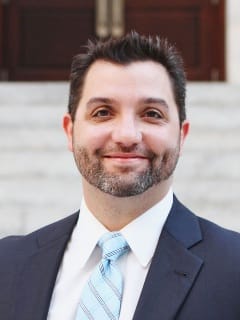
It’s currently unclear who will represent Pohlmeier.
The following civil charges were alleged by Clemens in the amended complaint:
- Common Law Negligence (Against Diocese)
- Negligent Training (Against Diocese)
- Negligent Supervision (Against Diocese)
- Breach of Implied-In-Fact Contract (Against Diocese)
- Common Law False Arrest (Against City)
- State Law False Arrest (Against Russano)
- Common Law Abuse of Process (Against City)
- Fourth Amendment - Unlawful Seizure/False Arrest (Against Russano)
- Monell Liability (Constitutional Violation) - Unlawful Seizure/False Arrest (Against City)
- Common Law False Arrest/False Imprisonment (Against Diocese)
The lawsuit claims that Clemens "immediately initiated an investigation” after a 13-year-old female student told him that Chell asked her to be his “secret girlfriend” while placing a hand on her shoulder and looking into her eyes.
The lawsuit alleges that Clemens “reviewed school surveillance footage corresponding to the time of the interaction, which showed [Chell] with his hands in his pockets—not on the student.”
According to the lawsuit, as part of his “investigation,” Clemens contacted Chell. The lawsuit purports that Chell “explained the context” of the interaction, stating, “during a conversation about improving her grades, the student had remarked that she did not intend to return to Saint Patrick due to a lack of male peers. [Chell] jokingly responded that she should ‘come back for him,’ referring to their teacher-student relationship. The student sarcastically asked, ‘are you asking me to be your girlfriend?’ to which [Chell] sarcastically replied, ‘yeah, that’s what I’m asking you.’”
According to the lawsuit, Clemens contacted the victim’s mother after her daughter reported Chell. The lawsuit indicates the victim’s mother did not take her own child seriously, stating her mom told Clemens that her daughter “had a history of exaggeration and expressed no concerns about the interaction, stating that there was no issue.”
Clemens’ lawsuit openly admits that he did not take immediate action after the allegation to separate the victim and Chell. Instead, he called the victim and Chell into the same room as part of his “investigation.” The lawsuit openly admits that Clemens questioned them both about the encounter in the same room.
The lawsuit states that Clemens reported the matter to then-St. Patrick Interparish Principal Jason Acosta in accordance with the Diocese’s “mandatory reporting policies.” The lawsuit states Acosta "specifically instructed” Clemens to “not contact [the Department of Children and Families (DCF)] or law enforcement until receiving further guidance from the Diocese.” Below this statement, the lawsuit says, “Acosta later could not recall this contact by [Clemens].”
The lawsuit continues, “[Clemens] immediately called the Diocese the same day, [February 21, 2024], and left a voicemail with Rhonda Rose, Assistant to Deacon Scott Conway, to return his call immediately. Scott Conway is the Superintendent for the Diocese for the geographic area in which St. Patrick’s Interparish School is located. [Clemens'] point of contact within the Diocese was Rhonda Rose. [Clemens] followed up again the next day after receiving no response from Rose. The Diocese did not return either call until two days later, at which point Rose advised [Clemens] to contact DCF.”
The lawsuit states Clemens called DCF after Rose told him to. The lawsuit says the “facts” that Clemens “described did not give rise to a mandatory reporting obligation.”
The lawsuit says that on February 26, 2024, a teacher told Clemens that three girls wanted to talk to him about Chell. The lawsuit subtly tries to shift blame onto the victims for Chell’s actions, especially with the third girl, stating, “One of the students conveyed that [Chell] may have said ‘thanks, love you’ after she retrieved a badminton birdie from the school stage. The second student stated that when she gave [Chell] a high five, he would hold her hand by interlocking his fingers with hers, which she thought was ‘weird’ and that [Chell] would say ‘thanks, I love you’ when she collected basket balls and she felt that he expected her to respond in kind. The third student said that when she gave [Chell] a hug, sometimes his hand would be on her lower back which made her feel uncomfortable. When asked if his hand went lower than her back, she said no. The third girl also said that one time, [Chell] told her that she could not sit where she wanted to, after which she started acting childish (her words) and that he grabbed her chin and said ‘aw, aren‘t you cute,’ treating her playfully as a baby, which is how she was acting.”
The lawsuit continues:
"The bell then rang and [Clemens] went to the Defendant Diocese’s School Counselor who advised to do nothing until the students were consulted individually the following day. After the students were consulted the following day, [Clemens] again contacted the Diocese and spoke to Ms. Rose, who advised to skip DCF and call the non-emergency police line, which is exactly what [Clemens] did on February 27, 2024. There was no response at that time from law enforcement.
On Wednesday, February 28, 2024, [Chell] was fired by Acosta, who had the authority to fire him. [Clemens] had no authority to fire him.
On February 29, 2024, [Clemens] went into the former Athletic Director’s office and retrieved his telephone to delete the personalized standard message. He also took down a dry erase board that contained nice remarks about [Chell] from students and teachers.
There were no telephone numbers on this board. The erasure occurred in the presence of Charlie Williams and Paul Wessels and before an official investigation was open. Law enforcement did not initiate contact until March 1, 2024 at 3:45 p.m.
On March 1, 2024, Detective Desiree Russano of GPD contacted [Clemens] for an interview about [Chell].
On March 2, 2024, [Chell] was permitted to clean out his office.
On March 8, 2024, Russano served a warrant to locate a double sided mirror, surveillance cameras and other items. She spoke to [Clemens] at that time and he told her about the dry erase board. Russano told [Clemens] it was understandable that he would want to remove the positive comments about [Chell].
Despite having complied fully with internal policies and having acted with diligence, caution, and transparency throughout the process, [Clemens] was arrested on March 13, 2024, by Defendant Detective Russano and charged with Felony Child Neglect and Felony Destruction of Evidence.
These charges were baseless and not supported by probable cause, and the State Attorney's Office later declined to proceed.
The Felony Child Neglect charge was based on [Clemens] taking no action regarding the first report on February 20, 2024, which is false. He did take action and even DCF concluded that no action was going [to] be taken on the information provided. Regarding the report from the three students on February 26, 2024, after a discussion with the Defendant Diocese’s School Counselor, [Clemens] interviewed the students again the following day, obtained new information and immediately contacted law enforcement.
The Felony Destruction of Evidence charge was based on the erasure of the dry erase board, which [Clemens] was alleged to have destroyed on March 2, 2024, after law enforcement was involved, which was false as it had been erased on February 29, 2024, the day before law enforcement was involved, as discussed above. There was no evidence on the board to destroy and this charge was false…
Rather than acknowledge the insufficiency of those charges, Russano escalated and doubled down on her efforts against [Clemens], and on April 22, 2024, she brought a second wave of charges, including: Felony False Statement to Law Enforcement, two (2) additional counts of Felony Child Neglect, two (2) Felony counts of Failure to Report Suspected Child Abuse, and one (1) Misdemeanor count of Failure to Report Child Abuse, all based on the same information Russano had in her possession when she originally charged [Clemens] on March 13, 2024.
Indeed, the second set of accusations was even less indicative of abuse, and no reasonable official could have concluded that [Clemens] had violated Florida’s mandatory reporting laws. The charges served as an effort to justify [Clemens’] initial arrest after the original case began to unravel.”
Clemens alleged that Russano attributed false statements to him in her reports and omitted the first victim’s mother not being concerned.
Clemens alleged that Russano falsely reported him overhearing Chell admit to asking a student to be his “secret girlfriend.”
Clemens alleged that Russano falsely stated another teacher reported concerns about Chell to him on February 22, 2024, regarding Chell staring at a student through a window, stating the report occurred on February 29, 2024.
Clemens alleged that Russano reported that another student was victimized on February 27 but did not identify the victim or describe the incident. The lawsuit says the allegation must be false because Chell “was present in a classroom with another teacher and had no classes due to testing that day.”
The lawsuit continues:
“The day after his initial arrest, [Clemens] was terminated by the Diocese.
On June 3, 2024, the State Attorney’s Office formally declined to prosecute the case and filed a nolle prosequi, dropping all charges against [Clemens].
As a direct and proximate result of Defendants’ actions, [Clemens] has suffered reputational harm, severe emotional distress, loss of income, and permanent damage to his career in education and administration.
The Diocese’s policies, as applied and enforced, created conflicting obligations and left [Clemens] vulnerable to retaliation, discipline, and criminal liability despite his compliance with internal directives and state law.
The Diocese failed to properly train and supervise its employees regarding Florida’s mandatory reporting laws, failed to respond in a timely manner to internal reports, and wrongfully terminated [Clemens] for following the very policy it promulgated…
GPD, through Detective Russano, ignored exculpatory evidence, made up evidence to charge [Clemens] and initiated criminal proceedings against [Clemens] without probable cause.
After the charges were dropped, the Diocese stated that it did not believe that [Clemens] violated any laws and was trying to be as helpful as possible during the investigation.”
Motion to Dismiss:
Pohlmeier hasn’t yet submitted a response.
The City of Gainesville and Russano submitted a joint-dismissal motion to dismiss all counts against them. The motion argues that Clemens mistakenly believed Russano had no probable cause because prosecutors dropped the case. The motion explains that police officers aren’t held to the same burden of proof as prosecutors. Police officers only need probable cause that a person has committed a crime to make an arrest, while prosecutors need to prove a case beyond a reasonable doubt to secure a conviction from a jury.
Attorney Weisman argued the following:
"In the spring of 2024, revelations of grooming and pedophilia-type activity rocked a Catholic school here in Gainesville… Det. Russano investigated the matter. During the course of her investigation, it became clear that the Athletic Director (who functioned more in the role of gym teacher) was engaging in criminal acts. He was eventually arrested.
Det. Russano also arrested [Clemens], the Assistant Principal, for tampering with evidence and for contributing to the neglect of children by failing to adequately or timely report what he knew. [Clemens] was arrested and bonded out a day or two later. Approximately three months later, the state attorney dropped the charges against [Clemens]. He now sues, claiming false arrest and a host of other things…
The Amended Complaint asserts self-serving and conclusory statements, such as how [Clemens] ‘acted with diligence, caution, and transparency…’ but was nonetheless arrested on charges that were ‘baseless and not supported by probable cause…’ In sum, the Amended Complaint essentially urges and concludes that ‘[Clemens] did nothing wrong but Det. Russano arrested him anyways.’ This is the exact sort of unadorned, ‘the-defendant- unlawfully-harmed-me’ type accusation that the Supreme Court has warned against…
[Clemens’] Amended Complaint essentially begins by disclosing the inciting incident that led to all these disturbing revelations, which was that on February 20, 2024, a young female student at St. Patrick School disclosed to [him] that [Chell] had made her uncomfortable by touching her and asking her to be his ‘secret girlfriend…’ The Amended Complaint then discusses how [Clemens] discussed this with [Chell] and [Chell] divulged that he and the student had been discussing whether the student should leave the school or ‘come back for him...’ and that the two had discussed whether [he] and a thirteen-year-old girl should be boyfriend-and-girlfriend… The Amended Complaint then states that [Clemens] called the thirteen-year-old victim and [Chell] into a meeting and ‘further questioned them about the encounter…’
The upshot of the next few paragraphs of the Amended Complaint is that [Clemens] reported this conversation to school officials (but not to law enforcement or to the child abuse hotline), and that the suspected abuse was not actually reported to officials until three (3) days later… A few days later, on February 26, [Clemens] apparently received more disclosures from students about disturbing behavior by [Chell], which [Clemens] claims to have ‘reported’ not by calling DCF but by calling the police non - emergency line the following day.
The Amended Complaint also describes how [Clemens] tampered with evidence that might have otherwise been useful to law enforcement’s investigation. It describes how, after [Chell] was fired, [Clemens] went into [Chell’s] office on February 29 and ‘took down a dry erase board that contained nice remarks about [Chell] from students and teachers...’ The following day, Det. Russano contacted [Clemens] in connection with this investigation… A week later, Det. Russano was carrying out a search warrant at the school when she learned from [Clemens] that he had removed or otherwise destroyed whatever was written on the dry erase board… The Amended Complaint then simply asserts that [Clemens] ‘acted with diligence, caution, and transparency’ but was arrested anyways… There was sufficient suspicion to support Det. Russano’s belief that probable cause existed to arrest [Clemens]...
Det. Russano’s investigation initially established that [Clemens] had held a meeting with one particular victim and [Chell]... In this meeting, [Chell] denied having asked the young girl to be his ‘secret girlfriend,’ and at that time and place [Clemens] seemed to side with the alleged abuser against the child… Russano later learned from [Clemens], through [Clemens], [he] had personally heard [Chell] admit to asking the young girl to be his ‘secret girlfriend.’ The next day, the young girl’s parents withdrew her from the school…
Det. Russano learned that all these disclosures had occurred on February 20, and that [Clemens] was of course aware of them, but [he] did not report any of it to DCF until February 23, 2024… During this interim ‘non-reporting’ time… Det. Russano also learned [that] an adult employee at the school expressed to [Clemens] that [Chell’s] behavior towards young girls was making the employee ‘uncomfortable…’
Then Det. Russano learned that a few days later, three female sixth-graders approached [Clemens] and disclosed inappropriate behavior by [Chell] and described him as a ‘pedophile…’ Then Det. Russano learned that the day after [Clemens] was told that [Chell] was a pedophile, another child was apparently victimized…
[Chell] was finally fired on February 28, 2024… A few days later, [Clemens] described to Det. Russano that there had been a ‘board’ in [Chell’s] office with notes from young girls to [Chell] which could have provided leads as to other victims or evidence… Despite the fact that he knew or should have known that the board might have been of evidentiary value to Det. Russano, [Clemens] removed and discarded this board from [Chell’s] office after [he] was fired…
[Chell] was arrested on March 7, 2024…
[On March 13, 2024], [Clemens] was interviewed at GPD and was arrested there… It was a warrantless arrest…
Det. Russano had probable cause to believe [Clemens] tampered with evidence. [Clemens] had been one of the central characters in this scandal at the school for over a week at the point when [Chell] got fired, and in a situation where any reasonable person would have contemplated that law enforcement involvement may have been impending, [Clemens] cleaned out [Chell’s] office and removed or threw away or cleaned up or otherwise destroyed this potential evidence…
It is evident from [Clemens’] Amended Complaint that [their] position is going to be ‘Sure, Mr. Clemons erased or threw away the board, but he did it before the police made personal contact with him, so he can’t be guilty of evidence tampering and therefore this must have been a false arrest from the start.’ This approach would be misguided for a couple of reasons. For one thing, the question at this stage is not whether evidence existed to support a jury verdict beyond a reasonable doubt at the moment of arrest—the question is whether an officer in Det. Russano’s shoes could have believed that a substantial chance of criminal activity was afoot…
Florida’s child neglect statute says that any person 'who willfully or by culpable negligence neglects a child without causing great bodily harm, permanent disability, or permanent disfigurement to the child commits a felony of the third degree...' Det. Russano’s theory for arresting [Clemens] on this charge was or could have been that [Clemens] received the report from the three young girls that [Chell] was ‘a pedophile’ yet [Clemens] did nothing and that at least one other girl was victimized between the time of this disclosure and the date when [Chell] was finally fired. Det. Russano had probable cause to bring charges on these grounds as well…
Paragraphs 32-46 of [Clemens’] Amended Complaint essentially amount to one long rant about how the statements and information compiled in Det. Russano’s police report were supposedly shot through with falsehoods and ‘lies...’ But every accusation is a confession: taken in its totality, the facts asserted in the four corners of the Amended Complaint admit that [Chell] was involved in highly suspicious, disturbing, and criminal behavior; that [Clemens] became aware of it and failed to report it to DCF for three days; and that [Clemens] erased or otherwise destroyed something that might very well have been of evidentiary value…
[Clemens] was arrested on March 13, 2024… He bonded out shortly thereafter and was never in custody again with regard to any of the matters referenced in the Complaint. Det. Russano’s investigation continued, and, as the Amended Complaint would have it, she ‘brought a second wave of charges…’
[Clemens’] Amended Complaint describes the filing of these additional prospective charges as a ‘continued unlawful seizure…’ However, as the docket lines from all of these cases show, none of these instances resulted in any arrest or any booking or any formal charges against [Clemens]... [Clemens] was never taken into custody on any of these affidavits, never had a bond set, and no formal charges were pursued by the state attorney. [Clemens] remained out on bond and at liberty the entire time.”
More information on the lawsuit will be released as it becomes available.