Immigrant Rights Activists and Attorney say GPD is Misapplying Law with Undocumented Immigrant Reporting Policy
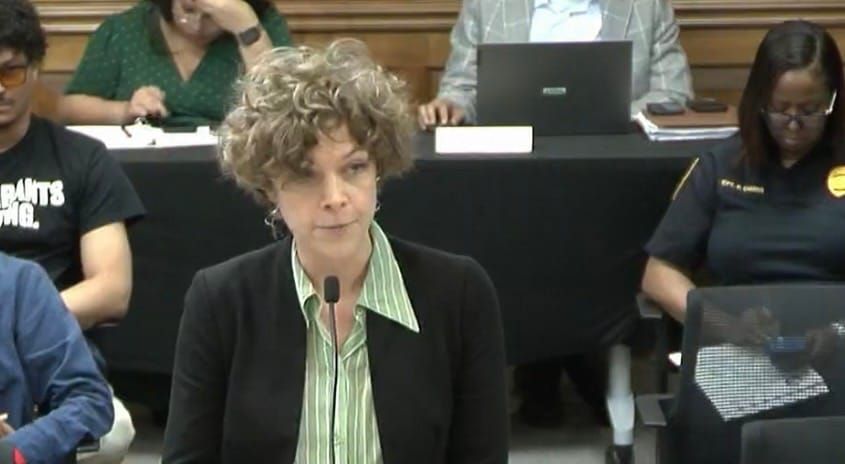
On Thursday, November 19, activists led by the Gainesville Immigrant Neighbor Inclusion Initiative (GINI) urged city commissioners to stand against the Gainesville Police Department (GPD) general order that requires officers to report suspected undocumented immigrants to the state.
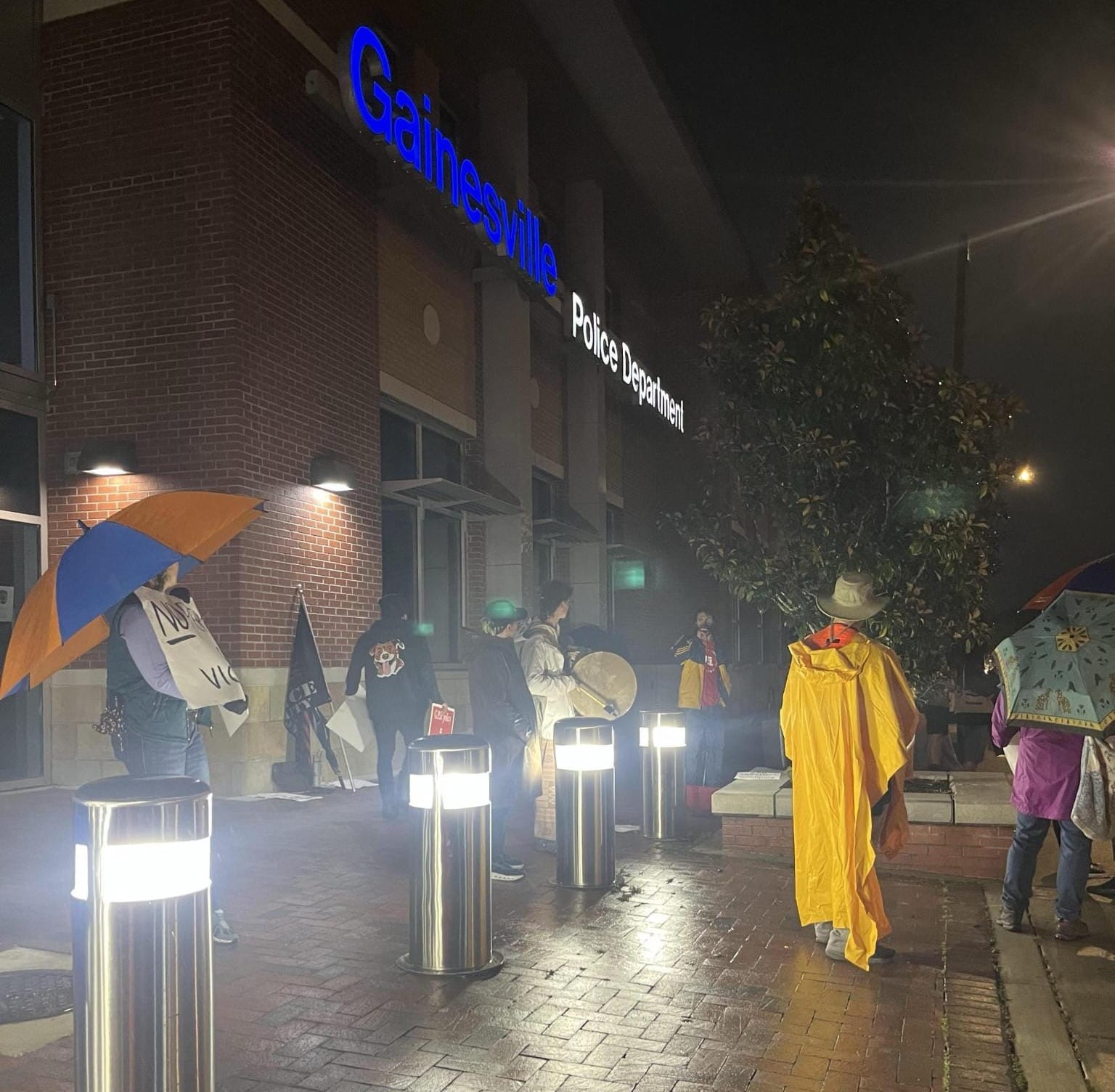
This came one day after GINI held a protest outside GPD. It also comes amid efforts from student activists at the University of Florida who want to remove the UF Police Department’s 287(g) agreement with ICE.
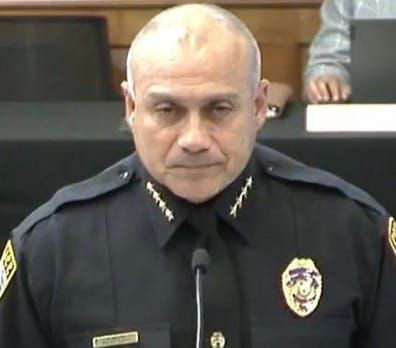
GPD Chief Nelson Moya has argued that he’s not required to sign a 287(g) agreement, but that the law requires he and his officers to report suspected undocumented immigrants if there is “reasonable suspicion” to believe they are in the country without legal authorization.
UF student Carlos Giglio told city commissioners that the policy makes victims and witnesses scared to report. “If they can’t go to GPD, where are they supposed to go?” he said
Registered nurse Abigail Toulman said the fear of ICE is a barrier to healthcare, pointing out the reduction in urgent care usage during Operation Metro Surge in Minnesota. She said she is aware of pregnant women who are afraid to go to the hospital because of ICE. She said GPD’s policy leads to a similar result, including in cases of domestic violence and child abuse.
GINI coordinator Ethan Maia de Needell said that after first passing the policy, GPD said it was required due to Florida Statute 908.1031. He said, “When GINI and the community showed how that statute does not apply to 82.4, and countless calls demanded an explanation, Gainesville residents were then told that the city’s hands were tied because of Florida Administrative Code 11Q-2.”
Maia de Needell said city leaders were informed that Code 11Q-2 has not been adopted by the state. “Yet the order remains in place and there has been no public acknowledgment from anyone on the dais,” he said. “Your hands are not tied by any state statute, administrative code, rule or law, and your continued refusal to not call for the end of a policy that institutionalizes racial profiling, destroys public trust, and harms community safety, is unacceptable. Now that we see the state is moving to formally adopt a drafted data collection rule, are you all waiting for your decision to be made for you? We do not know when it will be passed, how long the process may take or what the final language will look like. But you all have the power today to cancel the policy and prevent more of our neighbors, including victims and witnesses, from having targets placed on their backs for ICE.”
Maia de Needell said General Order 82.4 opens the city up to liability by “requiring unauthorized GPD officers, who are not legally able to determine whether someone is unlawfully present… to investigate an individual's immigration status… " He said, "GINI is watching how this order is being implemented and working with legal organizations, such as the Community Justice Project, to explore legal action if and when appropriate… GPD’s order is also currently putting the safety and trust of victims and witnesses needlessly at risk. It is completely within your ability to carve out protections for this critical and vulnerable population by following what Florida law already actually does have in place, according to statute 908.104, Section 7. It is stated that cooperation with federal authorities does not apply to victims and witnesses of a crime if they are assisting law enforcement.”
Supervising attorney with the National Immigration Project, Tess Helgren, said she regularly engages in federal and class-action litigation to challenge unlawful immigration detention. She said the statute cited by GPD does not require them to implement the policy, and affirmed the proposed administrative rule has not been finalized or adopted.
“The GPD policy is about what officers should do when they encounter an individual they believe to be quote an unauthorized non-citizen,” said Helgren. “It provides no clear definition of who such individuals are, nor clear guidance of how officers should be conducting these stops in accordance with law, and the policy recognizes that GPD officers are not delegated to enforce federal immigration law, or trained in its application. This invitation to guess about an individual's immigration status will become an invitation to racially profile...”
Helgren went on to say, “Information collected through this policy is in service of federal immigration enforcement that has consistently and egregiously violated the law. I have personally worked with many Florida residents, including in Gainesville, who have had to challenge their unlawful immigration detention in court. Single parents separated from children, elderly individuals, people with medical needs… Since July 2025, federal courts have ruled against the government in over 22,000 cases challenging unlawful immigration detention. GPD should not adopt policies that make it more likely for our neighbors to join these statistics.”
Venezuelan-American Abigail Parrott spoke about a young and homeless Central American woman whom she advocated for.
“There were no available beds at the shelter, and at the time, a sizable encampment still existed on the surrounding land," Parrott said. "She didn't speak any English, making it even more difficult to support her or gather information, especially with about 300 other people needing crisis support in an under-resourced environment. She was understandably scared and timid. She went into the woods with the other campers who had nowhere else to go. Unfortunately, as is often the case in this line of work, men were waiting, claiming to help her, keep her safe or show her the ropes, but ultimately exploiting her vulnerability. She looked like a child and was inevitably sexually exploited. For several days, she was treated like property, much like how our current immigrant detention center treats innocent people. It didn't take long for us to notice her situation, and once we did, we worked urgently to find a safer place for her. Immigrant women face sexual abuse and violence at a rate of about 50%, nearly three times the national average. Furthermore, statistics show that women who are sexually assaulted are about 35 times more likely to be assaulted again. I cannot even imagine how much harder it is for so many immigrant women in our region who have lost their breadwinners. Wherever this young woman is now, she is likely still at risk. Yet, under policies like GPD’s Show Me Your Papers policy, she will never feel safe asking for help, and neither will other victims.”
Following public comment, Mayor Harvey Ward did not acknowledge the speakers and moved on to the next agenda item.
(City of Gainesville)
Commissioner Bryan Eastman spoke up to address the advocates, stating, “We as a city have worked very hard to ensure that we have that relationship between our police department and folks within our community. I am very sensitive to the topic, particularly—of anyone who is within our community, and with the resources, that we are under utilizing GPD resources for federal immigration work in the first place, much less, doing it in a community that, it's not our role. It's not our responsibility. We're also under state law... We have had our city attorney look at it... We're sort of in this funny gray area between where—between what is required and where we want to go, and where we can be. I have heard, and I would like staff to look at witnesses and victims of crime. I thought that was a very important point.”
Commissioner Casey Willits asked if an existing policy overlays all policy regarding victims and witnesses.
City Attorney Daniel Nee said GPD is “fully aware” of the provisions of the law that protect victims and witnesses from immigration-related investigations.
Willits suggested there be a higher threshold than “reasonable suspicion.”
City Manager Andrew Persons said they’ll follow up on Willits’ comments. Persons added that Moya signs U-visas for victims and witnesses to protect them from deportation.
“I think everyone is doing their best here to provide the protection we can for our immigrant community...” said Commissioner James Ingle. “If we've got good policies that people don't know about, those policies don't give any comfort to the people that need to come forward... If we can take a look at what we can do to make that more explicit... or make sure those protections are there, or if they're not, to the extent that we can."
- Notable police records, court documents and civil lawsuits will be directly emailed to your inbox on a regular basis.
- You will gain access to documentation showcasing numerous pending public records requests submitted by GnvInfo. Depending on the submission format used by the agency, you will gain access to the FOIA links directly.
- You will be granted early access to videos on the GnvInfo YouTube channel at least two days before the content is made public. The channel often posts body camera videos, court hearing videos and footage from public meetings that aren’t available anywhere else.