Sister Cities of Gainesville Origins Connected to Soviet Diamond Trade
Update | February 21, 2026: Another clip and photo was added, another quote from the CDI website was added, and clarification was added regarding one of the founders being named as a founder on the CDI website but not being mentioned in the documentary.
The origins of a local international organization are connected to deals between Gainesville and Soviet Union diamond traders.
The Sister Cities of Gainesville is a non-profit in Gainesville, Florida. Presently, the organization is doing business as the Greater Gainesville International Center while simultaneously operating under the banner of the Sister Cities of Gainesville, which is a member of Sister Cities International. GGIC/Sister Cities of Gainesville has also operated under the banner of Citizen Diplomacy Initiatives (CDI).
The Gainesville–Novorossiysk, Soviet Russia sister city relationship was officially started in the early 80s by Steven Kalishman, who was admitted to the Florida Bar in 1983. The CDI website states that Kalishman had help from local lawyer Paul Rothstein, who has been admitted to the Florida Bar since 1980. Another founder of the program was Steven Kalishman's wife, Natalia Kalishman, who was admitted to the Florida Bar in 1990.
Kalishman was the longtime director of the Sister Cities of Gainesville nonprofit until Lauren Poe, the former mayor of Gainesville, formally took the reins about a year or two ago.
In 1985, a documentary titled “Ask Your Sister to Dance" was released, telling the story of how the Gainesville–Novorossiysk sister city relationship was created.
Ask Your Sister to Dance was “made possible by a grant from Phillips Trading Company, a Gainesville, Florida, company engaged in trade with the Soviet Union and Japan,” according to the introduction.
Steven and Natalia Kalishman met in Novorossiysk and moved to Gainesville after getting married. Natalia Kalishman said she was working as an interpreter and tour guide while her now-husband was working as a seaman on an American ship carrying grain that arrived in the port where she was employed.
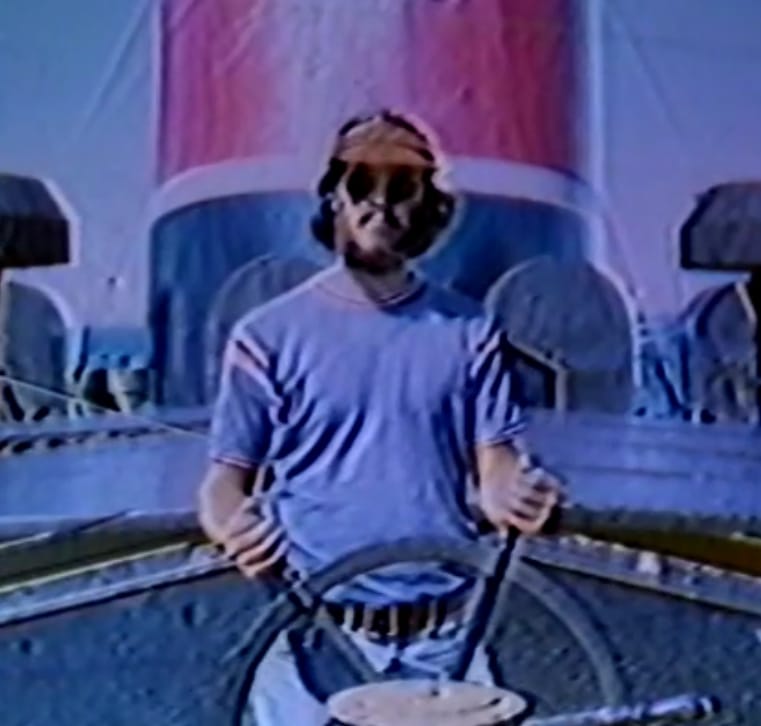
Steven Kalishman said a few years after getting married, he and his wife returned to Novorossiysk to visit her parents and decided to try to get a cultural exchange started between the Soviet city and Gainesville.
Steven Kalishman and Rothstein convinced the Gainesville City Commission in June 1982 and they passed a resolution to become sister cities with Novorossiysk, according to the CDI website. However, Rothstein is not mentioned by name in Ask Your Sister to Dance.
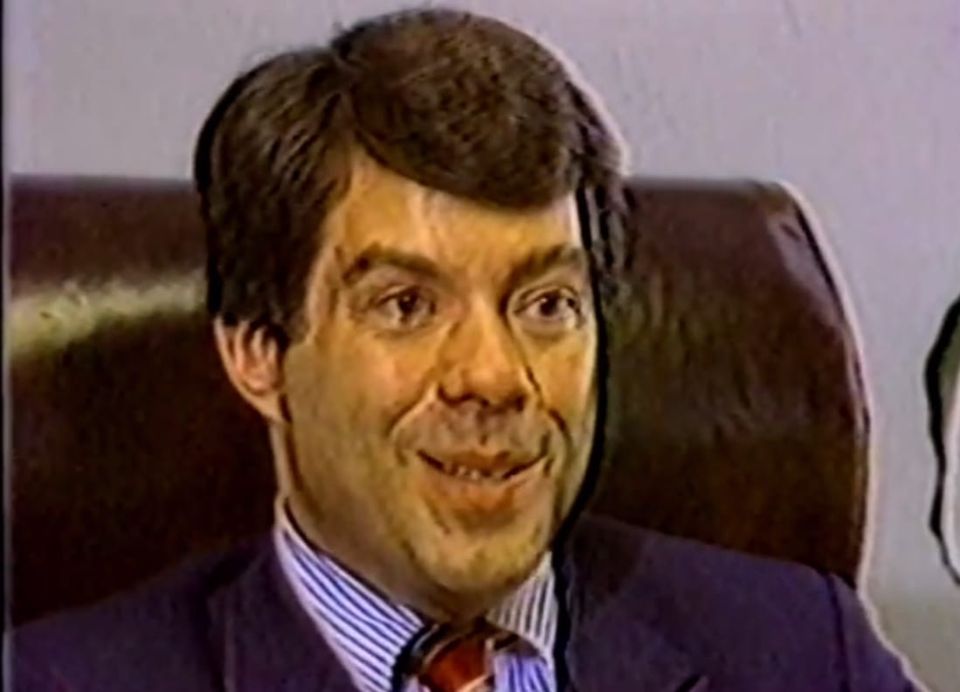
In an interview alongside his wife for the documentary, Steven Kalishman said, "We personally delivered the resolution to the mayor of Novorossiysk. Kalishman said the Soviet mayor was "quite astonished to see us arrive with these documents. They had never dreamed two American tourists would walk in their door asking to become sister cities. Well, after checking our credentials and seeing that we were for real, they became very excited about the idea of establishing a long-term relationship with the City of Gainesville."
(Ask Your Sister to Dance)
The CDI website states, "Alarmed by increasingly hostile exchanges between the governments of the United States and the Soviet Union—which had 50,000 nuclear weapons pointed at each other—Steve and Paul started a movement that culminated in the pairing of more than 200 U.S. and Soviet cities. This created hundreds of cultural exchanges at a time when no cultural exchange agreement existed between the two countries. These relationships eventually helped lead to the thawing of U.S./Soviet relations, which culminated with the end of the Cold War."
In 1983-1985, Gainesville sent annual delegations to Novorossiysk made up of local citizens and officials.
The 1985 delegation included then-Mayor Jean Chalmers. Chalmers said she was excited to go with her husband and “The Cross Creek Cloggers and Bucksnort Barn Dance Band.”
(Ask Your Sister to Dance)
Chalmers was interviewed for the mid-80s documentary and stated, "As you know, we have four sister cities in the City of Gainesville. The most active program is the one with Novorossiysk in the Soviet Union."
Regarding the first delegation, Chalmers said it was "by-large political; there was someone from the city commission and someone from the school board, then a few other people going to look just to see what happened. Of course what happened is they had a lovely time."
Regarding the second delegation, Chalmers said it had a “business flavoring to it. This was Kelly Phillips going over there to look at the gems and everyone was kind of interested in what we could do with commerce.”
As the documentary continues, Natalia Kalishman said, “One of the unexpected benefits of the Sister City Program was the establishment of trade relations with the Soviet Union. A member of our delegation, Kelly W. Phillips, in August 1984, went to Moscow and established contacts with trading companies in the Soviet Union and now he is successful with trading.”
(Ask Your Sister to Dance)
Businessman Kelly W. Phillips revealed that his primary motivation for going to Soviet Russia was to look into the diamond business. He said the Soviet Union was a major diamond producer and that they “marketed most of their production through the De Beers consortium; the South African firm that adversely controls the diamond business.”
"My objective for several years was to buy directly from them in Moscow and not go through the De Beers organization," said Phillips, stating they were "able to accomplish that" after a lot of ground work.
According to a law journal entry published by Lucinda Saunders in 2000, “Corporate actors facilitate the conflict diamond trade by buying illicit diamonds directly or indirectly from insurgent groups. De Beers' control of the diamond trade makes its involvement with conflict diamonds particularly relevant. For years, De Beers has set the price of diamonds for the entire diamond industry by acquiring the majority of diamonds before they reach the market. De Beers is able to acquire these diamonds both through its own mining activities and by purchasing diamonds from sellers outside the organization… De Beers controls about sixty percent of the world's uncut diamond sales… Before its change in policy, De Beers obtained diamonds both through production from its own mines and from outside markets, also known as the open market. De Beers does not operate any mines in conflict areas, thus, if De Beers obtains conflict diamonds, the company acquires them through the outside market buying process. This system creates problems of accountability because there are a number of intermediaries involved… Experts argue that De Beers knowingly bought diamonds from smugglers or other third parties in order to maintain its control over the supply of diamonds.”
According to research by Dr. Yury Skubko of the Institute for African Studies and Russian Academy of Sciences, "Since the Bolsheviks took power in 1917 huge amounts of treasures were confiscated from Russian aristocracy, bourgeoisie and church institutions, smuggled and sold abroad legally and most part illegally dumping the world diamond market. The flow of confiscated diamonds from Soviet Russia was really enormous so that De Beers, at that time already a main world producer of the stones, had to cut production of its diamond mines in South Africa by a quarter in 1921 in order to stop the slump of market prices. This downfall of world prices also did not please the Bolsheviks who needed more and more money to promote the world revolution. Leonid Krasin who headed the Soviet diplomatic mission in London in 1920 proposed to sell diamonds via De Beers to guarantee maximal profits via a joint cartel with a strong monopolist. Agreement was quickly reached."
Skubko goes on to report, "Contracts of the 1980-ies already guaranteed an annual sale of Soviet diamonds amounting to $1.2-1.5 billion. To avoid criticism from anti- apartheid organizations since 1963 the Soviet side signed contracts with a separate company – switch dealer 'City and West-East Ltd' registered in London that was an intermediary, later dealing directly with De Beers Central sales organization."
Skubko reported that Soviet dealings with De Beers did not go unnoticed by the United Nations (UN), citing a 1981 report from the UN Committee on Social, Humanitarian and Cultural Affairs that reportedly called the Soviet Union a "full partner of South Africa in the marketing of diamonds. The Soviet Union markets its diamonds through a cartel known as the Central Selling Organization [(CSO)]. The CSO controls the world diamond market and, in turn, is controlled by De Beers Ltd. of South Africa. Both the Soviet Union and South Africa market nearly all of their diamonds through this cartel. Since 1976 the Soviet Union has marketed more than half a billion dollars annually through this South African controlled cartel, which sells virtually all the USSR’s rough diamonds that are sold outside the Soviet block”
Phillips said that he joined forces with Steven and Natalia Kalishman and they “made a diligent effort to search out the appropriate Soviet officials.”
“To make a long story short, we came away with an open contract to buy diamonds,” said Phillips.
Phillips said that at first Soviet officials were “very cold but as we got to know them a little better and they found that we were interested in improving relations between the countries, and that we were working on the sister city program, it seemed to change their attitude a lot. They actually became helpful and gave us some pointers on how to approach selling them because we’re looking to export a product to the Soviet Union as well as to buy from them. They gave us some ideas and thoughts on how to go about it.”
Phillips went on to say, “You could take a group of Novorossiysk citizens and set them down by the library or down on the plaza downtown, nobody would ever notice, they look just like us. The ethnic mix is very similar and I think that’s kind of enlightening in itself because it's hard to dislike somebody that looks like you.”
(Ask Your Sister to Dance)
Florida business records show that Phillips filed annual reports for a business known as Diamond Traders International from 1982-1984 until it was involuntarily dissolved in 1985.
Phillips went on to file annual reports for a business called Kelly W. Phillips Diamonds in 1985 and 1987 but the business was involuntarily dissolved in 1988, records show.
Also in 1987, a business was filed titled K.W. Phillips Inc., with Kalishman serving as the registered agent and Kelly W. Phillips serving as a director. No annual reports were filed and the business was involuntarily dissolved the following year, according to public records.
The documentary also heard from Ed Hoovler, a flogger who attended the 1985 delegation. Hoovler stated, “Around 1978, a fellow came to Gainesville and said ‘Where’s clogging?’ There wasn’t any so we started a class at Santa Fe. In that first class as bare naked babies went on stage at the Florida Folk Festival in White Springs…. We look for the big audiences wherever we can. The Soviet Union, you’ve heard of that one. We said, ‘That’s a pretty big audience’ so we went over to Steve. We said, ‘Steve, what about dancing in the Soviet Union?’ He said, ‘Sure.’ I said, ‘Oh, that was easy.’ He said, ‘Sure you just gotta pay for it...’ [Steven Kalishman] said, ‘$40,000.’ I said, ‘No problem.’”
(Ask Your Sister to Dance)
In April 1986, Gainesville participated in the first U.S. – Soviet Sister Cities Conference at the Gold Lake Ranch in Boulder, Colorado.
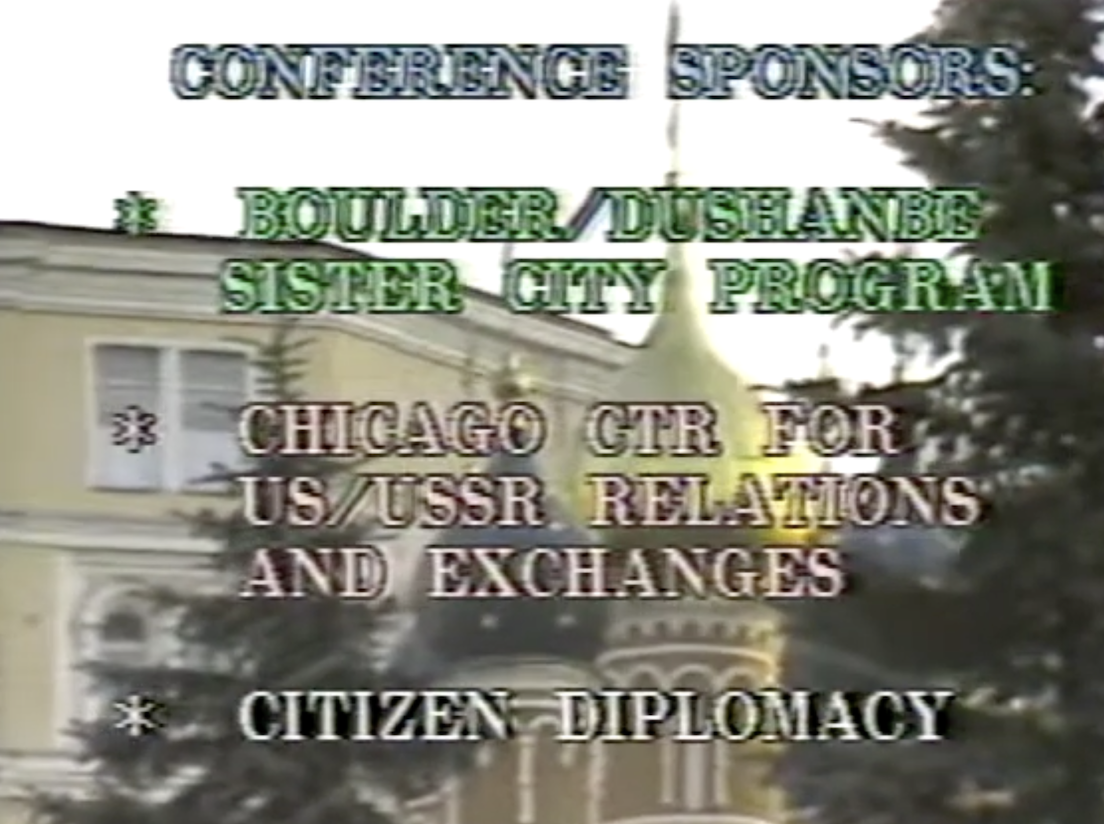
The conference was sponsored by the Boulder/Dushanbe Sister City Program, the Chicago CTR for U.S./USSR Relations and Exchanges, and Citizen Diplomacy.
Steven Kalishman states in a Youtube video that “Other cities began contacting us and after a few years we were able to connect 200 U.S. and Soviet cities, and then President Reagan went on Television and said 'this is why we need more Sister City programs.'”
Gainesville’s sister city relationship with Novorossiysk carried on after the fall of the Soviet Union and it remains active today.
After establishing Gainesville’s relationship with Novorissiisk, Kalishman would continue to pursue international endeavors.