Students Protest to Remove Flock Surveillance Cameras From University of Florida Campus

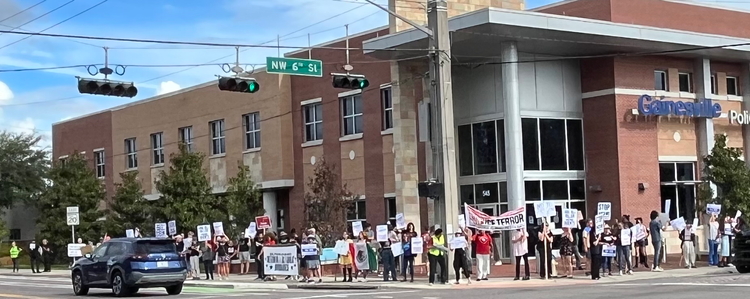
Last week, students came to Turlington Plaza to protest the use of Flock Safety cameras/automatic license plate readers (ALPRs) on campus and around Gainesville.
The protest followed a Sept. 1 decision by the Florida Department of Transportation (FDOT) to ban automated license plate readers, including Flock Safety cameras, from all state roads and highways. According to the surveillance map Deflock.me, Flock Safety has roughly five dozen cameras in the Gainesville area.
The FDOT directive, released on August 31, canceled all active permits for ALPRs on state highway rights-of-way and ordered agencies to remove the devices within 30 days. The government pointed to "the recent exponential increase in deployments along our roadways, coupled with concerning reports of misuse, data privacy concerns and surveillance schemes" to justify the prohibition. Gov. Ron DeSantis praised the decision, saying it will keep Florida from becoming a "digital AI surveillance state where everything we do is tracked at all times."
Just days after the FDOT memo, Gainesville Police Chief Nelson Moya announced that GPD would suspend its use of ALPR cameras mounted along city rights-of-way, effective Sept. 3 at 3 p.m.. Moya acknowledged the technology's value in solving serious crimes but said the suspension was "in the best interest of our community" while monitoring legislative developments. As of February, GPD had 10 Flock Safety cameras costing $25,000.
The protest was organized by Solidarity Gainesville, a libertarian socialist organization of UF students and Gainesville residents with a non-hierarchical structure, meaning it holds no executive board and views all members as equal.
A National Pattern of Abuse
Flock Safety’s national expansion in law enforcement has spurred privacy concerns and a growing record of documented misuse. A Washington Post investigation identified at least 50 cases in which law enforcement officers were charged or accused of using license plate reader technology for unauthorized surveillance, with 26 of those cases involving officers allegedly tracking wives, girlfriends, former partners or women they wanted to meet. Flock Safety technology was used in 46 of those cases.
The Institute for Justice, a nonprofit public interest law firm, has cataloged more than 200 incidents of ALPR abuse, including domestic stalking, wrongful stops and detentions, and non-law enforcement use. An ongoing review of media reports and public records identified dozens of cases nationwide of officers allegedly abusing ALPR data to keep tabs on romantic interests, with the bulk of those incidents happening since 2024. Nearly all of the offending officers were criminally charged and lost their jobs.
The cases often involve staggering numbers of unauthorized searches:
Kentucky
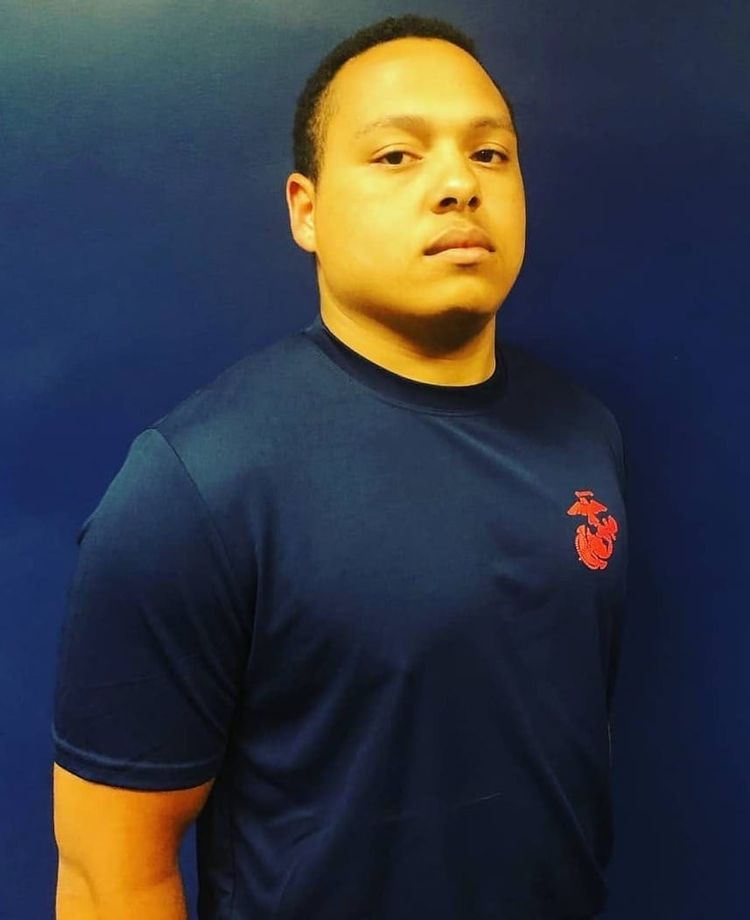
Shively Police Department Officer Asad Zahir was arrested after allegedly conducting 2,048 Flock searches from January into May 2026 to track two vehicles registered to his child’s mother. Investigators determined 241 of those searches happened while an order of protection was in place against him. Zahir was charged with five counts of official misconduct and five counts of unlawful access to a computer.

Florida
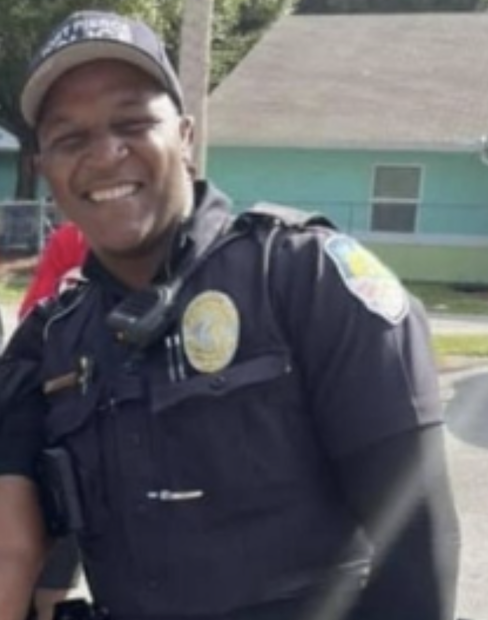
Former Fort Pierce police officer Josepher Crutchfield was arrested and charged with four felony counts of accessing a computer network without authorization. A USA TODAY analysis of Flock audit logs found Crutchfield used the service to search a woman’s license plate 189 times over eight months in 2025. Days after a reporter called her, the woman filed a petition for a protection order against Crutchfield for stalking.
Georgia
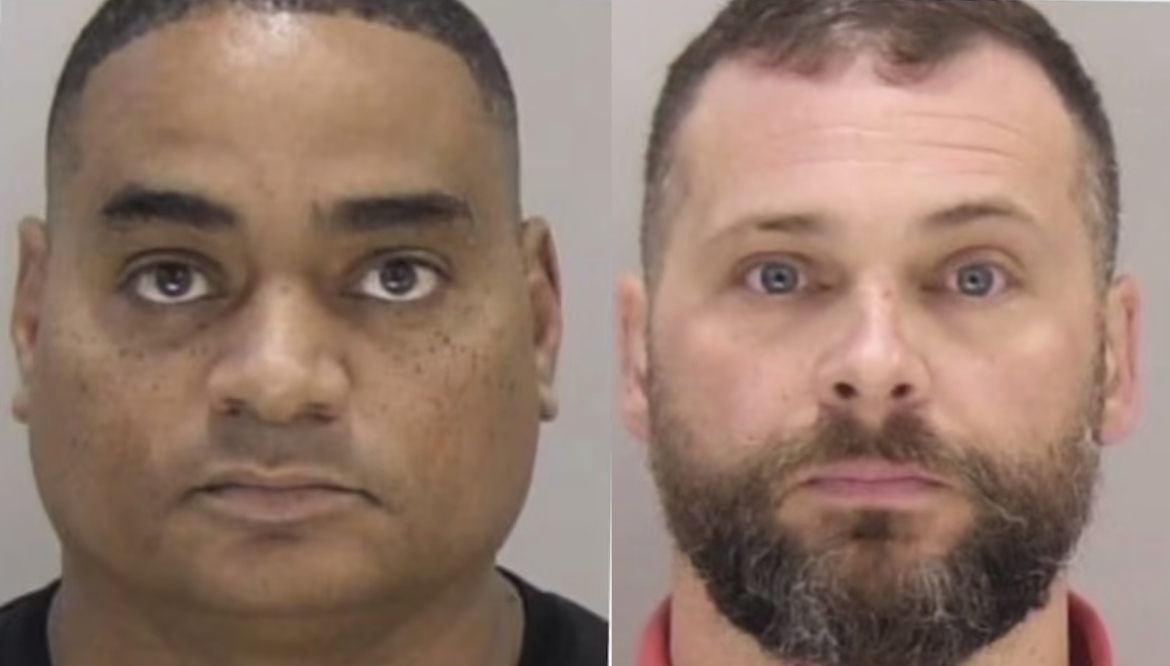
Richmond County Sheriff’s Office Deputy Jose Ferrer and Investigator Sean Morrow were arrested for misusing an ALPR and violating their oath of office. Ferrer used Flock to search a single tag at least 1,146 times from January 2023 to May 2025, entering “SUSPICIOUS” and “BOB” as his reasons for the searches.
Wisconsin
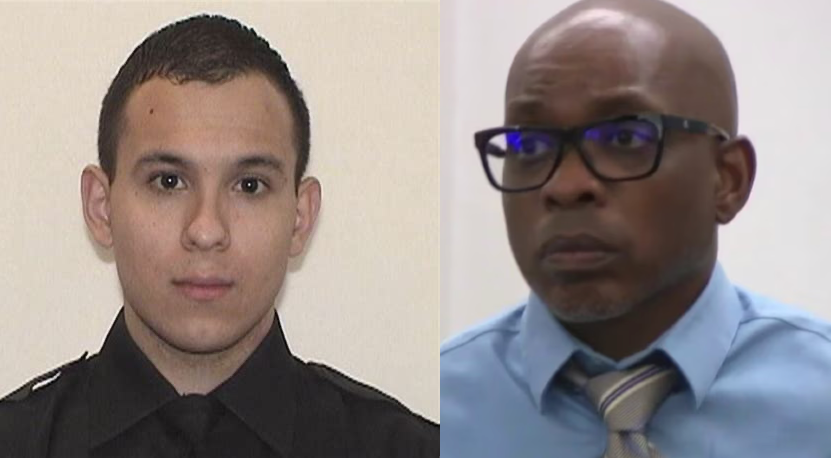
Milwaukee Police Department Officer Josue Ayala secretly used Flock to learn the location of his romantic partner 124 times and that partner’s ex 55 times, according to a criminal complaint. Ayala resigned and pleaded guilty to attempted misconduct in public office. Weeks later, one of the internal affairs detectives who was assigned to investigate Ayala, Tehrangi Chapman, was himself arrested for misusing the Flock system, admitting to using it to track two people and secretly installing a GPS device on one person’s vehicle.
Texas
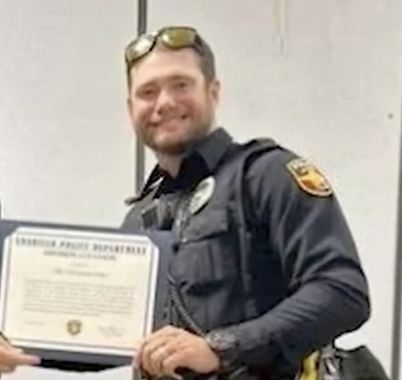
Former Amarillo police officer Christian Eder faces 78 misdemeanor counts accusing him of illegally using the department’s license plate reader system to stalk a romantic rival. A review showed he ran the man’s license plate number 76 times between Feb. 25 and June 13, 2026, listing fake reasons for the searches.
California
The San Jose Police Department (SJPD) fired an officer in April who abused the department’s Flock system to help his cousin track a woman who had accused him of domestic violence. Per the Institute for Justice, this was the third time an official in California used ALPR technology to stalk women. SJPD Chief Paul Joseph did not disclose the name of the officer when speaking to the Guardian.
"Almost Certainly an Undercount"
The known cases of police stalking are “almost certainly a vast underreporting of the overall abuse,” according to the Institute for Justice, because they largely include only cases in which the behavior was so egregious that it led to officers being fired, arrested, or both. Most incidents came to light only after victims reported the officers’ behavior to police, typically in the context of a broader stalking allegation rather than through internal audits.
Flock Safety has said it is “aware of 15 incidents of abuse, each surfaced because of the transparency and accountability features deliberately built into our platform.” A company spokesperson told 404 Media that with 140,000 monthly active users, “the relatively rare instances of abuse, while obviously wrong and awful, are exactly that rare."
Flock CEO Garrett Langley told the Washington Post that misuse represents a small fraction of the company’s users and said the company recently introduced an “audit assistance” tool designed to flag suspicious searches. “We’re not going to change humans, and humans make bad decisions,” Langley said. “What we can do is make sure that they know if you use this tool, you will be held accountable.”
The UF protest was part of a nationwide wave of opposition to Flock Safety's expanding ALPR network, which has over 100,000 cameras across the country. Privacy advocates have raised concerns about the company's data-sharing practices, including previous grants of data access to U.S. Immigration and Customs Enforcement and the U.S. Border Patrol. Florida law enforcement agencies have also used AI-powered license plate readers to track drivers tied to political protests and rallies throughout the state, according to police records.
The DeFlock movement is a broad coalition of Leftists, Right Wingers, and Centrists who all share a similar goal. During one of the most divisive times in U.S. history, disdain for ALPRs and surveillance tech is one of the more unifying issues.